Couples Conflict Workbook: Listen Better, Argue Less

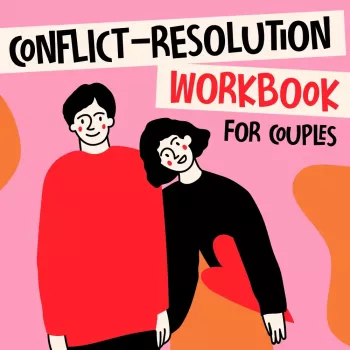
Conflict-Resolution Workbook for Couples: Practical Exercises to Improve Listening, Resolve Arguments, and Rebuild Trust
Recurring arguments often follow the same pattern: one person feels unheard, the other feels blamed, and both leave the conversation with less trust than they started. A structured workbook can turn conflict into a repeatable skill—slowing down escalation, improving listening, and guiding repair steps after hard conversations. This guide explains how to use a printable relationship communication workbook as a weekly practice, what to expect inside, and how to measure progress over time.
When conflict keeps repeating: common patterns that block connection
Most “same fight, different day” moments aren’t caused by a lack of caring—they’re caused by predictable loops that pull both partners off track.
- Escalation cycles: criticism → defensiveness → shutdown → resentment.
- “Content vs. process” confusion: debating the topic while ignoring tone, timing, and emotional safety.
- Mind-reading and assumptions: substituting guesses for clear requests.
- Unresolved repair attempts: small ruptures stack up when apologies are vague or conversations end mid-storm.
- Different conflict styles: pursuer vs. withdrawer dynamics that trigger each other’s stress response.
What a couples conflict-resolution workbook changes (and what it doesn’t)
A workbook doesn’t “fix” a relationship overnight. It changes the way conflict happens so both partners can practice skills that make repair easier.
- Changes the process: adds structure, turn-taking, and prompts that keep conversations from drifting into old scripts.
- Builds micro-skills: reflective listening, validation, and making clear, doable requests.
- Creates accountability: written agreements and follow-ups reduce the “nothing changed” feeling.
- Doesn’t replace therapy: if there are safety issues, coercion, intimidation, or abuse, a workbook is not enough.
- Works best with consistency: practicing when things are calm makes it easier to use the tools when things get heated.
Inside a printable relationship communication eBook: the core exercises that matter
The most helpful exercises are the ones that slow you down just enough to stay connected. Look for pages that guide both partners through specific actions—not just advice.
- Listening drills: paraphrase, confirm, and ask one curiosity question before responding.
- Emotion labeling prompts: naming emotions reduces all-or-nothing reactions and helps partners respond to the real need.
- Trigger mapping: identify what the argument is “really about” underneath the surface (fear, loneliness, disrespect, overwhelm).
- Repair scripts: how to pause, apologize effectively, and restart without re-litigating the whole past.
- Trust rebuilding steps: small promises, follow-through tracking, and gentle accountability.
For couples who want a ready-to-print system, the Conflict-Resolution Workbook for Couples | Printable Relationship Communication eBook is designed specifically for structured practice—listening, de-escalation, repair, and rebuilding trust.
A simple weekly routine to improve listening and reduce blowups
Progress usually shows up first as a calmer tone and faster recovery time—not as “never arguing.” A weekly rhythm makes that progress measurable.
- Pick a consistent time (30–45 minutes): avoid starting when either partner is hungry, exhausted, or rushed.
- Start with a 2-minute calming pause: breathing, a short walk, or quiet sitting to lower reactivity.
- Use a timer for turn-taking: Speaker shares; Listener reflects; Speaker confirms/corrects.
- End with one concrete request each: small, specific, time-bound.
- Schedule a 10-minute follow-up within 48 hours: review whether the request happened and adjust if needed.
Tip: using a consistent timer reduces “talking over” spirals. If having a dedicated wearable helps keep the structure, a simple accessory like the Stylish Sporty Apple Watch Band with Protective Bumper for Series 3/2/1 (38mm) can make it easier to keep the routine on your wrist and ready.
Conflict de-escalation tools: what to do in the moment
From arguments to agreements: how to create solutions that stick
| Step | What to do | Helpful prompt |
|---|---|---|
| 1) Set the frame | Agree on one topic and a time limit | “Can we talk about one thing for 30 minutes?” |
| 2) Speaker shares | Describe facts + feelings + needs (no mind-reading) | “When ___ happened, I felt ___. I need ___.” |
| 3) Listener reflects | Paraphrase and validate before responding | “What I’m hearing is ___. That makes sense because ___.” |
| 4) Clarify and confirm | Speaker corrects; Listener confirms understanding | “Yes, that’s it / Not quite—here’s what I mean…” |
| 5) Make one request | Ask for one specific, doable change | “This week, can you ___ by ___?” |
| 6) Close with repair | Appreciate effort and confirm the follow-up | “Thanks for staying with this. Let’s check in on ___.” |
Rebuilding trust after hard seasons: measurable, realistic steps
Using the printable workbook effectively: setup, printing, and sharing
When extra support is needed
A workbook is a skill-builder, but some situations require professional support. For research-based communication guidance, see resources from the American Psychological Association (APA) and the Gottman Institute. If there is fear, coercive control, intimidation, or immediate danger, contact local emergency services or a local resource such as the National Domestic Violence Hotline.
Recommended resource: printable conflict-resolution workbook for couples
FAQ
How often should couples use a conflict-resolution workbook to see results?
A weekly 30–45 minute session plus a brief follow-up within 48 hours is a realistic cadence. Early wins are usually a calmer tone and faster repair; track frequency of blowups, time to reconnect, and follow-through on small agreements.
Can a workbook help if one partner shuts down or avoids conflict?
Yes—structure, time limits, and turn-taking can reduce overwhelm and make it feel safer to stay engaged. Start with shorter sessions, use written prompts, and agree on a pause phrase; if shutdown is intense or tied to fear/trauma, professional support may help.
What if arguments are about many topics at once?
Use a one-topic rule and write everything else on a “later list,” then schedule separate sessions for those items. Aim to uncover the underlying need and leave each conversation with one small, specific agreement.










Leave a comment